Showing posts with label freelance website design. Show all posts

Tuesday, 14 July 2015

9 great articles and resources to get started with web design and colour theory

Credit: Matthew Telfer

As a culture and as individuals we assign certain values, emotions and perceptions to colours. These change depending on where you are in the world, but the fact they hold a value remains.

This great chart shows how colours have different meanings around the world.

Knowing that a colour will influence a decision is key information to help you with designing your website. Here are some fantastic articles and resources to help guide you making the most of these opportunities.

A look into colour theory and web design

1 sixrevisions
Read article

5 web design colours that encourage visitors to click that subscribe button

2 1stwebdesigner
Read article

An introduction to color theory for web designers

3 tutsplus
Read article

Color theory for designers

4 smashingmag
Read article

Color theory 101

5 designfestival
Read article

Colour scheme designer

6 colourschemedesigner
Go to resource

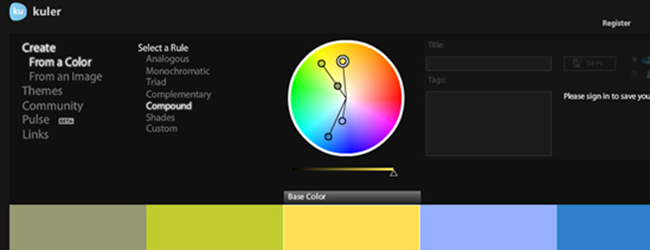
Kular

7 kular
Go to resource

25 examples of perfect colour combinations in web design

8 tympanus
Read article

The psychology of color in web design

9 vandalaydesign
Read article


For more information about working in the freelance sector or if you would like to hire a freelance designer, please contact us.


Conquest UK
Web: www.Conquest.uk.com
Email: Advice@Europe.com
Tel: 0871 910 0002
Calls cost 10p per minute + access charge

Connect
Conquest on Facebook
Conquest on Twitter
Conquest UK Google+
The Conquest UK Group Google+

Credit: Matthew Telfer

Freelance Web Designers: 5 ways to go the extra mile for your customers

Credit: Robert Mathers
First posted on 10/06/2013

The freelance web designer market is highly competitive at the moment. In 2012, we conducted a survey of 500 web designers in which 79% thought prices were being forced down due to increased competition and 4/5 believed that work was either more difficult or just as difficult to find compared to the last 12 months. With this level of competition, it’s really important for freelance web designers to find ways to differentiate themselves from others. A great way to achieve this is to provide customer service that consistently exceeds expectations.

How going the extra mile can help you

Being known for excellent service is a hugely valuable way to make yourself stand out because people will be far more likely to return for future work and there’s a good chance that they will let others know how impressive their experience with you was. This can be a big help when trying to get new clients as the 2012 Freelance Industry Report confirms by stating that the most effective ways to find and land new clients according to freelancers were referrals (chosen by 27.4% of those surveyed) and word of mouth (chosen by 23.8% of those surveyed).

It only takes a bit more effort to go the extra mile and over-delivering does not have to mean working many more hours on every project, it can be achieved simply by working smarter and thinking of ways to make life easier and to provide better results for your customers.
In this post, we’ll give you some ideas regarding what going the extra mile can do for your freelance web design business and how to go about it.

Extra Mile Map

1. Adopt quick response times

Responding quickly to your customers can help to increase trust and your perceived reliability. To make sure you stay on top of all your tasks when dealing with multiple clients, it’s a good idea to use Customer Relationship Management software because anything from forgetting a scheduled phone call to not performing significant parts of contracted work can easily upset and annoy people. To make sure this doesn’t happen, there are some brilliant CRM software packages available that are ideal for web designer users. For instance, base and StudioCloud both have free package options and come with great features to help you streamline your work processes.

2. Enable feedback and communication

When you start to work on projects for a customer, you could encourage them to engage in a dialogue with you either through email or social media so they can ask you any questions that come to them during the project. You can also use this line of communication to find out how you can help them more and, therefore, how you can make them so satisfied with your service that they never think to look elsewhere.

Feedback

3. Exceed your promises

If you promise to build a website for a customer by a certain date and then miss this deadline, this can negatively impact your relationship with them. The best thing to do is to promise things that you can definitely provide and then exceed these expectations. This is an easy way to show customers that you will over-deliver for them and to give them a memorable experience of using you.

4. Provide some extra service for free

After building a website for someone, why not finish off the package at no extra cost by setting up hosting for them, installing analytics and setting up their email addresses? These small jobs are quick and easy for you to complete and will make life easier for the customer. Offering these extras before starting to perform work for a customer can also help you to win the job in the first place by giving an excellent first impression.

5. Support your customers

If one of your customers is having problems that aren’t directly related to your work with them, try to give them some good advice anyway or point them in the direction of someone you think can give them what they need. This can be achieved very quickly but will mean a great deal to the customer, especially if their issue is causing them worry or eating up large amounts of their time. Doing this will also make them remember you long after their problem has been fixed and will show that you are interested in helping them, rather than just looking for them to pay you.

An example: Zappos

Zappos is a fantastic example of a company that consistently creates a ‘wow’ factor with their amazing customer service and they have achieved this through a range of different initiatives. For example, there is no limit to the length of customer service calls at Zappos, with the longest customer conversation to date lasting 10 hours. The company also gives you up to an entire year to return an item if you are not happy with it and their shipping is free and often done overnight. Zappos understands that high quality customer service involves developing a long term relationship; this is why they will search three different competitors’ websites and direct customers to those competitors if they do not have the requested item in stock. The benefits of this approach have been clear, with the company reaching $1 billion in sales after only eight years of trading and the fact that 75% of their customers are repeat customers.


For more information about working in the freelance sector or if you would like to hire a freelance designer, please contact us.


Conquest UK
Web: www.Conquest.uk.com
Email: Advice@Europe.com
Tel: 0871 910 0002
Calls cost 10p per minute + access charge

Connect
Conquest on Facebook
Conquest on Twitter
Conquest UK Google+
The Conquest UK Group Google+

Credit: Robert Mathers

7 tips to boost your time management skills when building a website

Credit: Robert Mathers

When working on a website, it is common to face a rush of high-priority tasks and it is easy to feel a little overwhelmed.

The best way to stay productive and stress-free in these situations is through proactive time management skills.

Here are our top tips for planning your time when building websites so you can take a methodical approach to maximising your productivity.

1. Create To-Do-Lists

To-Do-Lists are really effective for making sure you’re on track with each stage of your project. Beyond jotting down your tasks, use a system to break up items into top priority, mid-level priority and low priority categories based on how crucial the action is and when it needs to be completed by.

These lists help to show a wider view of the website you are working on, give you a record of what you have already done and make you less likely to forget key tasks even if they do not need immediate action. There are many excellent online task list tools to help you make the process even easier. Examples include TeuxDeux, HiTask, Remember the Milk and Todoist.

2. Use down-time to your advantage

Even when you’re busy building websites, there are periods of time during the day when you have the opportunity to come up with new ideas about how to produce better results and get pages finished more quickly. Whenever you are walking somewhere, driving, travelling on public transport, showering and so on, you have time to consider the details of the project and develop further approaches to help you perform more efficiently.

Down-time also gives you space to unclutter your mind and this makes it much easier to envision the website as a whole and make better overall decisions. Try carrying a notepad and pen during these times so you can write any ideas down as they come to you.

3. Focus on the task at hand

Working on one website from start to finish makes it easier to streamline your work. We can often be tempted to work on different projects simultaneously but this is likely to take more time because you have to remind yourself of the finer details of each task when you return to it and immerse yourself to resolve any issues you encounter.

There is also a variety of potential distractions that are best avoided if you are working to finish a website on a tight deadline. These can include social media, surfing the web, personal email, unexpected requests and personal calls. Although it can be difficult to keep your concentration when you encounter these distractions, you will have a much better chance of getting the website finished on time.

4. Distribute the workload

Projects can often require much more work than we had anticipated and this is why, if you work in a team, delegating small tasks to others, like image editing and acquiring relevant content, will help you meet your deadlines.

Delegating tasks does not have to be a negative thing and can provide great benefits for those you delegate to as well as yourself. When people receive small projects they have the opportunity to develop and enhance their skills and to learn about the larger task that you are carrying out.

Even if you are working on a website by yourself there are plenty of online apps that can help to speed things up and take care of jobs for you.

For example, try Privacy Policy Generator if you need to create professional privacy policies for websites. Launchlist is another great tool that helps you check your work before launching a project.

CSS3 Generator and HTML2 Canvas are also available to make the coding process quicker and there is Colour Scheme Designer 3 to help you develop colour combinations as well.

5. Make a log of your time

This is an excellent way to get a clear picture of how you spend your time and to identify periods in which you can be more productive. Use time-tracking applications, such as Harvest, TimeSheet or ManicTime, to make a note of everything that you do during a typical week.

Give this a try; you may see ways in which you can merge tasks together to save time or find a few vacant periods that can be used to complete smaller tasks.

6. Set realistic deadlines

There are potential issues with setting deadlines that are too soon, too far in the future and not setting deadlines at all. If you don’t give yourself long enough to finish set tasks, this can result in making you stressed out and over-worked, negatively impacting your ability to produce high-quality websites.

Having a deadline that is much further in the future than is needed can create problems because there may be less of an incentive to perform at your best and you will often be losing time that could be used more effectively on different projects.

Even worse is not setting a deadline at all, because you don’t have a target to aim for and this can make your work less structured and focused.
To get a decent balance, carefully consider how long building a site will take based on the information you have and allow yourself a reasonable cushion of extra time in case any issues present themselves.

7. Develop routines

Getting into routines when you’re working can make it much easier to manage your time. Using the information from making a time log, it should be quite simple to group together certain types of tasks that you regularly undertake when building a website, such as coding, launching the site and adding extra resources.

Creating routine actions for these means that you will be able to speed up these processes over time and plan to complete crucial items at the times when you are most effective.
We hope that you have enjoyed this article and that you can use these methods and tools to reflect on how you are currently managing your time when building websites and identify ways in which you can optimise your productivity
.
What are your top tips for managing your time when building a website?
Let us know in the comments below.

For more information about building a website or if you would like to hire an expert designer, please contact us.

Conquest UK
Web: www.Conquest.uk.com
Email: Advice@Europe.com
Tel: 0871 910 0002
Calls cost 10p per minute + access charge

Connect
Conquest on Facebook
Conquest on Twitter
Conquest UK Google+
The Conquest UK Group Google+

Credit: Robert Mathers

A guide to being a freelance web designer: Part 3: Pitches and events

Credit: Robert Mathers

In my last blog post on selling yourself as a freelance web designer, I talked about how to develop value propositions and elevator pitches to show prospective clients why you’re the right fit for them. In this final post of the series, I’ll explain how to get out and start selling yourself effectively at pitches and events to develop your client base.

Pitches

So, you’ve been invited to pitch by a client that you would love to work with. It’s highly likely that there will be strong competition for projects such as these with a variety of freelancers applying; this is why it’s important to be as prepared as possible to give yourself the best chance of success and following the points below will help you to do just that.

Before attending the pitch, you may have been sent a brief for the project to have a look through. Researching this thoroughly helps you to become extremely familiar with the project that needs to be performed and gives you a decent start in the pitching process.

Go through the brief carefully and make notes on relevant details including…
• What you have to deliver
• What the different stages of the project are
• How your experience matches the requirements
• If you’ll be working or liaising with anyone else on the project
• What resources you’ll need to do the work
• Who you report to
• The timescale on which different stages have to be completed

You should also research the company as much as possible and, in cases where the project doesn’t yet have a defined brief, you should focus on this even more to ensure that you’re prepared.

Your research should cover…

Their website
What is the website’s look and feel like?
How do they describe and position themselves?
Are they up to date or years behind?

Their social media channels
Are they active or inactive?
How much do they engage with their followers and friends?
What kind of content do they post?

Their competitors
Who are their major competitors?
What advantages and disadvantages do they have in relation to the company you’re pitching to?

The person you will be pitching to
If you know who this is, research their position and experience on LinkedIn.

The company’s larger goals
What are they?
How does this project fit into them?
Why do they want to achieve these goals?

Any suppliers the company works with
Who are they?
How does the company work with them?
What do these relationships say about the company as a whole?

Reviews of their products and/or services
What do customers like and dislike about the company’s products and/or services,
What do these results tell you about the company?

Any recent news stories in which they have been featured
Which online publications have they been featured in?
Do these articles tell you anything about their success or positioning?

Make a note of all the relevant information you find in your research and use this to your advantage when pitching to the prospective client. This information can also be particularly helpful when coming up with the questions that you want to ask them during the pitch. When going through the information that you have gathered, what would you like to know to help you to do an amazing job on this project?

Examples of these questions could include…
What desired outcomes are you looking for this project to produce?
What problem does this project intend to solve?
How does solving this problem relate to your future goals as a company?

When you attend the pitch, try to bring some examples of relevant work with you to prove that you have the ability to produce great results on the project.

Consider before the pitch how you will talk about the work and be sure to include clear facts and figures to show how successful your work was.

When you’re in the pitch, make sure that you are your best self, but don’t put on an act that you think will impress them. When you’re being genuine and letting your personality shine through the client will be able to tell and be more likely to warm to you and this can also take some of the tension out of a pitch. Be friendly and clearly passionate about the project and company.

Try to get the key elements of your value proposition and elevator pitch from the previous post in this series into the pitch. These elements can be used within your pitch to present yourself as a fantastic candidate and to provide excellent responses to any questions in which you must describe yourself, your style of working, your experience and your key strengths. Having these statements and knowing them comfortably should also help to make you feel more confident and at ease during the pitch because they will make you feel more prepared.

Later, if the client contacts you to say that you’ve won the pitch, be sure to reply within 48 hours and aim to set up a meeting to discuss further details before getting started. Congratulate yourself on your success and take stock of what you have achieved.

If you’ve been unsuccessful, try not to take this too hard. You may have been extremely close to being selected and you’ve now got even more experience of pitching to draw upon for next time. It’s still a good idea to send an email or note to the client thanking them for the opportunity because this will make them more likely to remember you if someone they know mentions an upcoming project that you’d be right for.

Events

Events are another great way to meet prospective clients and to sell yourself to them. They also give you the opportunity to engage people in a deeper level of communication than if you were to have a conversation with them over the phone or via email and this makes it easier to start creating business relationships.

It’s best to talk to just a few people at an event so you can develop a rapport with them and have more time to discover how you can help each other. If you try to speak to lots of different people during the event, you might find that you end up without many connections keeping in touch with you after the event is over. Remember that you’re attending events to see what you can do for others and this is the approach that will help you the most.

When you speak to people, take a genuine interest in what they have to say because, even if they don’t have a direct need for your services, they may know someone who you could form an excellent long-term business relationship with who they might be happy to put you in touch with if you present yourself in a confident and friendly way.

Whilst you’re talking to someone, take a moment every once in a while to consider the body language that you’re using.

For the best results…
• Smile genuinely
• Have an upright posture
• Make consistent eye-contact
• Move naturally
• Use hand gestures
Try to avoid…
• Folding your arms
• Fidgeting
• Checking the time
• Putting your hands on your hips
• Tapping your feet

When your conversation with someone at an event has come to a natural end, remember to exchange business cards so you can contact each other later. You also want to make sure that you arrive at an event with more cards than you will need and that your cards are designed to convey your values as a freelancer.

If you are highly professional and are looking to perform web design for people in professional or corporate industries, make the messaging and design on your business cards convey this as well, whereas if you’re keen to work in the arts for small businesses you might want to adopt a slightly less formal style.

When the event is over, you should follow up with the people you had great discussions with. An email is often the best way to make contact after an event and you should try to send one within 48 hours. In your email, let them know how much you enjoyed talking to them and try to develop some of the opportunities you mentioned to each other.

The way in which they respond will give you clues as to how to proceed and which methods of contact to use for this. It might be a good idea to have a phone conversation to further your relationship or even meet face to face again.

If you’d like any further advice on selling yourself as a freelance web designer, feel free to post your questions in the comments below along with any tips you have on this subject.


For more information about working in the freelance sector or if you would like to hire a freelance designer, please contact us.


Conquest UK
Web: www.Conquest.uk.com
Email: Advice@Europe.com
Tel: 0871 910 0002
Calls cost 10p per minute + access charge

Connect
Conquest on Facebook
Conquest on Twitter
Conquest UK Google+
The Conquest UK Group Google+

Credit: Robert Mathers
A guide to being a freelance web designer: Part 2: Defining your selling point

Credit: Robert Mathers

In my last blog post on selling yourself as a freelance web designer, I talked about how to understand your target audience. This time, I’ll explain how to use the insights you gained from stepping into your audience’s shoes to discover which of your selling points will be most effective in making clients keen to work with you.

Discover how you match your prospects’ expectations

To get started, open up your document with all the notes you collected from your target audience research and look through it to get a sense of the key skills that your ideal clients are looking for in web designers. You can then take each point within these criteria and match them with your experience and knowledge. For example, if the client would find it beneficial for you to have advanced knowledge of SEO, note cases in which you have demonstrated this ability.

It’s even better if you can add facts and figures to show what you’ve achieved because explaining that your SEO recommendations increased your previous employer’s online traffic by 30% is much more effective than simply mentioning that you have SEO experience. If you’ve noticed some key areas in which you’ve not had much exposure, try to find ways to gain that experience so you can clearly demonstrate your value and increase your chances of winning more work in the future.

Value proposition

Knowing how you can meet the needs of your ideal clients is a great first step, now you just have to think about the best ways to communicate these facts and, to get the ball rolling, it’s best to start with a value proposition.

There are moments when you will have to give someone a meaningful reason to work with you in a very concise sentence. You may be in a pitch and want to use this to conclude with impact; you may not have long to talk with someone about why your skills would be valuable to them or you might even have someone directly asking you “So, why should I work with you”? For cases like these, a value proposition can prove extremely helpful, particularly because it’s very easy to give answers that don’t represent you at your best if you don’t have one prepared.

There are a few features that a great value proposition should have…

Memorable
Use the language in your value proposition to make sure that those who hear it will remember you. It’s possible that a prospective client might not be able to work with you immediately, but in the near future a project could come up that fits your skills perfectly and the more memorable you have been to them, the greater the chance that they will think to get in touch with you.

Concise
Remember that this statement is meant to get across really important information in as few words as possible because this will make it easier for a client to recall and have more impact.

Different
There are lots of freelance web designers out there, so make sure that your value proposition helps you to stand out from others. The people you’re targeting may often get requests for work from plenty of web designers so you’re likely to get ignored unless you present yourself differently.

Confident
Great value propositions have to be confident both in the language that they use and in how they are delivered. Make sure you don’t overdo your confidence to the point that it becomes arrogance though because it’s easy to spot the difference between these behaviours and people won’t want to work with those that seem overly boastful. Just show the client that you believe in yourself and that you’re right for them.

Here are a few examples of value proposition statements to help get you started:

• I’m valuable to clients because I have five years’ experience of performing web design that delivers excellent results in this industry.

• I always go the extra mile for my clients by offering to set up their web hosting and email addresses for free.

• I’m different because my marketing background gives me a greater understanding of how web design can positively impact businesses.

Elevator pitch

If you think that you’ve got a bit more time in which to convince someone of your skills, it’s a good idea to have an elevator pitch to draw upon. This is a 30-60 second business description of yourself that tells someone why they should be interested in you and the name comes from an imaginary scenario in which you find yourself in an elevator on the ground floor with an ideal prospect and only have until the elevator reaches the top floor to convince them to work with you.
For inspiration, take a look at these great examples of elevator pitches for freelance web designers from Graphic Design Blender and Freelance Switch.

“I’m a web designer specialising in sites that my clients can manage and update on their own without any knowledge of HTML. There are a lot of designers out there who want to have control of your site and charge you every time you make a change, but I’m not like that. So next time you think about redesigning your web site, give me a call and we’ll create a beautiful site you can update on your own.”

“You know how small businesses often struggle to get the most out of their websites? Well, what I do is create websites that really engage browsers and work hard to convert them into customers – with measurable results. One company I worked with recently was able to increase online sales by 40% over 3 months.”

Rehearse examples of your pitch a few times after you’ve finished writing them to make sure you’re comfortable when delivering them and that they sound professional and persuasive.

Once you’re confident that you can communicate your skills and experience to potential clients in ways that they will find interesting and relevant it’s time to get out there and start selling yourself.
In the third and final post in this series, I’ll explain how to put the statements you have developed from this section into action when networking with people at events and pitching directly to people that you really want to work with.


For more information about working in the freelance sector or if you would like to hire a freelance designer, please contact us.


Conquest UK
Web: www.Conquest.uk.com
Email: Advice@Europe.com
Tel: 0871 910 0002
Calls cost 10p per minute + access charge

Connect
Conquest on Facebook
Conquest on Twitter
Conquest UK Google+
The Conquest UK Group Google+

Credit: Robert Mathers